What Is a Crypto Payment Gateway? How It Works (2026 Guide)
12/06/2026
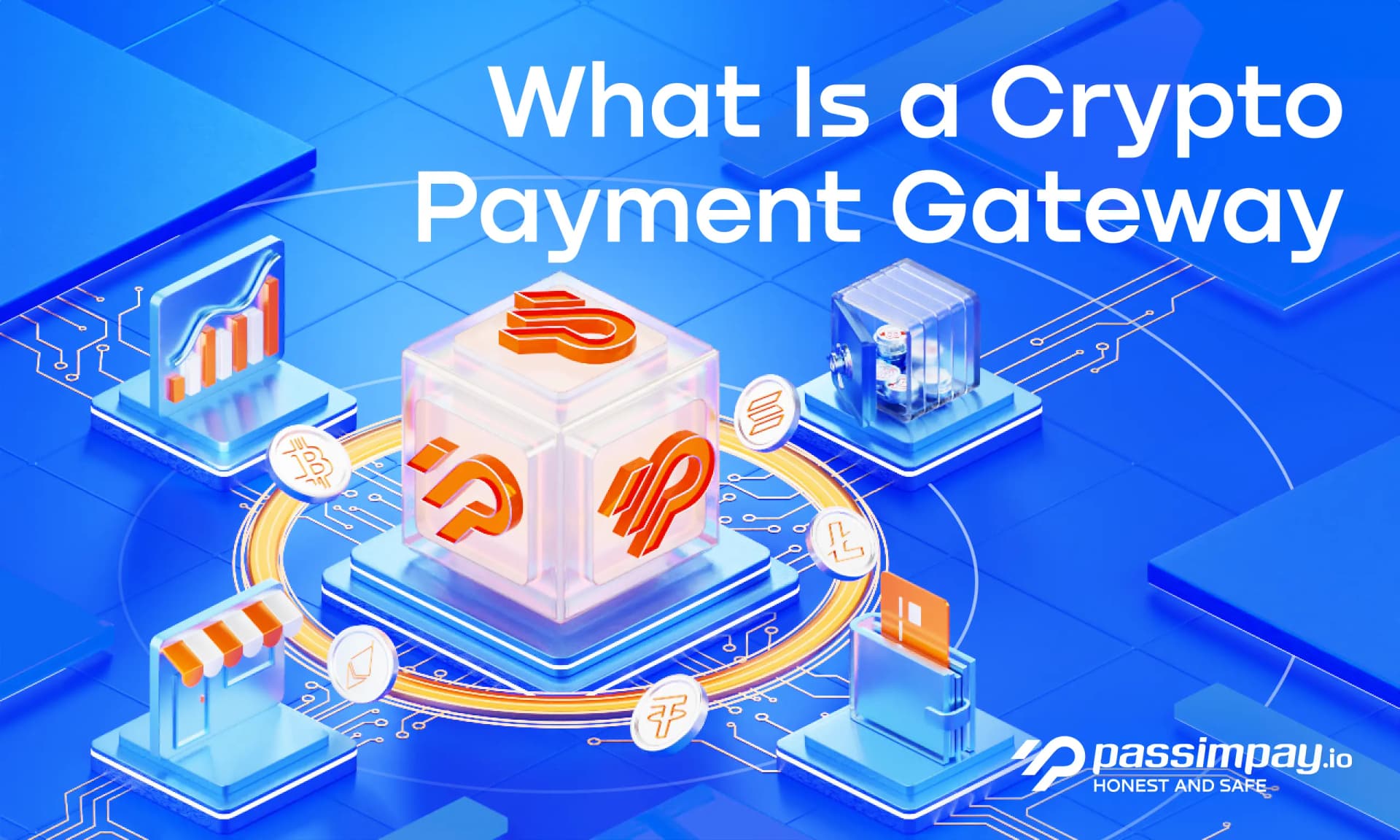
A crypto payment gateway is a service that lets businesses accept cryptocurrency and receive the proceeds in crypto or local currency. When a customer pays, the gateway issues a one-time payment address, waits for on-chain confirmation, then settles the funds to the merchant's account. Most platforms support auto-conversion to fiat at settlement, typically within minutes, so merchants have no need to hold or manage digital assets directly.
Introduction
More businesses are adding cryptocurrency to their checkout options. In the U.S. alone, crypto payment adoption is projected to grow 82% between 2024 and 2026, according to CoinLaw. A wallet address is not a payment solution, so it cannot handle invoicing, currency conversion, compliance, or reconciliation at scale. This is what a crypto payment gateway does.
In This Guide
- What a crypto payment gateway actually is, and how it differs from a wallet or an exchange
- How a payment flows from customer checkout to merchant settlement, step by step
- Custodial vs non-custodial gateways, and the risk profile of each model
- A direct comparison with card and bank payments across fees, speed, chargebacks, and fraud exposure
- Practical criteria for evaluating a gateway before committing to a provider
- An honest look at the risks, such as volatility, custody exposure, regulatory status, and UX gaps
- FAQ on security, legality, tax, and integration
What Is a Crypto Payment Gateway?
A crypto payment gateway is the infrastructure layer that sits between a buyer's crypto wallet and a merchant's account. Its job is to process the transaction, to generate a payment address, verify funds on the blockchain, handle currency conversion if needed, and route the settlement.
Think of it like a card acquirer in traditional payments. When a customer pays with a Visa card, the acquirer authorizes the transaction, communicates with the card network, and deposits funds into the merchant's account. A cryptocurrency payment gateway does the equivalent work, but on blockchain instead of card networks.
What it is not matters as much as what it is. A gateway is not a wallet. Wallets store assets, gateways process payments. It is not an exchange. Exchanges let users trade assets, gateways let merchants receive them.
Gateway vs Crypto Wallet
A crypto wallet stores private keys and gives users the ability to hold, send, and receive digital assets. A payment gateway generates on-demand payment addresses, monitors transactions in real time, handles currency conversion, and delivers settled funds to the merchant. Using a wallet address alone to accept payments means managing all of that manually, which breaks down under any meaningful transaction volume.
Gateway vs Crypto Payment Processor
Technically, a payment processor handles transaction logic (authorization, routing, and settlement) while a gateway is the interface between the merchant's system and the processor. In practice, most providers today combine both functions in a single product. When someone refers to a "crypto payment processor," they almost always mean a solution that includes the gateway layer as well.
How Does a Crypto Payment Gateway Work?
The payment flow is straightforward once broken into its components. Each step involves a specific actor:
|
|
|
|
|
|
|
|
|
|
|
|
|
|
|
|
|
|
|
|
|
|
|
|
|
|
|
|
Confirmation time depends on the network. Bitcoin targets one block every 10 minutes; merchants typically wait 1–6 confirmations, putting total settlement between 10 minutes and over an hour under network load. Ethereum averages 12 seconds per block, so most ETH and ERC-20 transactions confirm within minutes. Stablecoins on TRON (3-second blocks) or Solana (sub-second finality) settle in seconds under normal conditions.
Types of Crypto Payment Gateways
Custodial Gateways
In a custodial model, the gateway provider temporarily holds funds between the customer's payment and the merchant's settlement. The provider manages private keys and handles conversion and payout on the merchant's behalf.
The advantage is that there is no wallet management, no key handling, while onboarding is fast. The trade-off is counterparty exposure. If the provider experiences a security breach, insolvency, or regulatory action, merchant funds in transit are at risk. Before committing to a custodial gateway, verify the provider's security certifications, licensing status, and typical payout timeline.
Non-Custodial Gateways
Non-custodial gateways never hold the merchant's funds. Payments move directly from the customer's wallet to the merchant's wallet, with the gateway managing only checkout logic, address generation, and notifications.
This model eliminates counterparty risk, so the provider cannot freeze, lose, or misappropriate merchant funds. It suits businesses that want maximum control and are comfortable managing their own wallet infrastructure. The downside is that the merchant takes on responsibility for wallet security, key management, and fiat conversion through a separate service.
Hosted vs Self-Hosted
Hosted gateways are fully managed by the provider. Checkout pages, transaction monitoring, and payouts all run on their infrastructure. Setup typically takes hours, and no development is required.
Self-hosted gateways integrate via API and give the merchant full control over the checkout experience, branding, and data flow. This option suits businesses with development resources that need to own the complete payment experience. Most businesses start with a hosted option and move to API integration as transaction volume scales.
Crypto Payment Gateway vs Traditional Payment Methods
The differences are significant across several parameters:
|
|
|
|
|
|
|
|
|
|
|
|
|
|
|
|
|
|
|
|
|
|
|
|
|
|
|
|
Card fees compound across transaction type, geography, and card type. A cross-border payment from a corporate card can carry effective fees above 3.5% once all components are counted. Crypto gateway fees stay flat regardless of where the customer is located.
Key Benefits of Using a Crypto Payment Gateway
Lower Transaction Fees
Crypto gateways typically charge 0.5–1% per transaction, compared to 1.5–3.5% for card processing. For a business processing $100,000 per month, the difference can reach $2,000–$2,500 in direct fee savings. The gap widens further on international transactions, where card networks add foreign exchange markups on top of the base rate.
No Chargebacks
Blockchain transactions are irreversible by design. The moment a crypto transaction confirms on-chain, no card network, bank, or third party can reverse it. This eliminates chargeback fraud entirely — a significant and well-documented cost for merchants in travel, gaming, digital goods, and subscription services, where dispute rates consistently run higher than cross-industry averages.
Global Reach Without Banking Friction
Crypto carries no correspondent bank requirements and no acquiring geography restrictions. A merchant in Europe can receive payment from a customer in Southeast Asia or Latin America without a local banking relationship, a multi-currency account, or currency conversion overhead at the point of sale.
Instant or Same-Day Settlement
Traditional card payments typically settle 1–3 business days after the transaction. Most crypto networks complete settlement within minutes.
Fiat Payouts via Auto-Conversion
Auto-conversion lets merchants accept crypto from customers and receive local currency or a chosen stablecoin without holding volatile assets. The gateway converts at settlement; the merchant sees fiat in their account without managing a crypto treasury.
Risks and Limitations
Crypto gateways carry real risks that should inform implementation decisions:
Volatility: Even with auto-conversion active, there is a short window between payment receipt and conversion during which asset prices can move. For stablecoins, this risk is negligible. For BTC or ETH with slower confirmation times, the exposure is more pronounced during high-volatility periods.
Custody risk: Custodial gateways hold funds until payout. That creates counterparty exposure. If the provider experiences a security incident, regulatory action, or operational failure, merchant funds could be delayed or put at risk.
Regulatory uncertainty: The legal treatment of crypto payments varies by jurisdiction. What is regulated in one country may require licensing or specific reporting obligations in another.
Customer UX: A meaningful share of potential customers does not hold or know how to send crypto. Adding crypto as an additional payment method makes sense; replacing existing checkout options with it does not.
Technical complexity: Non-custodial and API-integrated setups require development resources and ongoing maintenance. Underestimating the integration scope is a common mistake among teams moving quickly to add crypto payments.
What to Look for When Choosing a Crypto Payment Gateway
Choosing based on headline fees alone is a mistake. The real evaluation covers several dimensions:
- Supported cryptocurrencies and networks: Check for stablecoin coverage (USDT, USDC) alongside BTC and ETH. Stablecoins now represent 50% of all crypto payments globally. So, a gateway without stablecoin support is missing the majority of real-world volume.
- Fiat payout options and auto-conversion speed: Confirm which settlement currencies are available, what the conversion rate methodology is, and how quickly funds reach your account after conversion.
- Fee structure: Look beyond the transaction percentage. Network fees, withdrawal fees, and minimum payout thresholds all affect total cost. A low headline rate with high withdrawal fees can be more expensive in practice.
- API quality and e-commerce plugin availability: Well-documented APIs with clear webhooks reduce integration time significantly. Pre-built plugins for WooCommerce, Shopify, or Magento matter if development resources are limited.
- KYC/AML compliance and licensing: In the EU, crypto asset service providers must hold MiCA authorization as of December 2024. A gateway operating without proper licensing creates compliance exposure for the merchants using it.
- Custodial vs non-custodial model: Understand who holds funds between transaction and settlement, and what contractual protections apply if the provider fails or restricts access.
- Settlement speed: Confirm both the on-chain confirmation timeline and the fiat payout schedule separately. These are two distinct timelines and both matter for cash flow planning.
- Support quality and uptime SLA: Payment failures during peak traffic affect revenue. Review the provider's SLA terms and check independent incident history before signing.
Businesses often use crypto payment providers like PassimPay to manage this entire stack, from checkout to fiat payout, without building the infrastructure from scratch.
Which Cryptocurrencies Do Gateways Support?
Not all gateways support the same assets. The right selection depends on where the merchant's customers are and what they hold:
- Bitcoin (BTC): The most widely held asset and the default starting point for most merchants. Block times average 10 minutes, and network fees vary with congestion.
- ETH and ERC-20 tokens: Fast confirmations (~12 seconds per block) and a broad ecosystem of users across DeFi, NFTs, and mainstream crypto holders.
- Stablecoins (USDT, USDC): They remove volatility risk entirely, settle in seconds on Tron or Solana, and represent the clear majority of crypto payment volume in 2026.
- Alternative networks — Solana, TON, Tron: Low fees and fast finality. Relevant where BTC and ETH network costs are a barrier to small-ticket transactions.
BTC + ETH + USDT covers the majority of use cases. Expand from there based on actual customer payment patterns, not assumed preferences.
How to Integrate a Crypto Payment Gateway
Integration complexity ranges from zero development to a full custom build, depending on the method:
- Hosted checkout page: No development required. The gateway serves the payment page; merchants redirect customers at checkout. Fastest path to a live integration.
- API integration: Full control over the checkout experience, built against the gateway's API. Requires development resources, documentation review, and end-to-end testing.
- E-commerce plugins: Pre-built connectors for WooCommerce, Shopify, and Magento reduce integration to a configuration task with no custom code in most cases.
- Invoice and payment links: Suitable for B2B invoicing, freelancers, and low-volume operations where a full checkout integration is unnecessary overhead.
- POS terminal: QR-code-based point-of-sale for physical locations is still an emerging option, but gaining traction in retail, travel, and hospitality.
Is a Crypto Payment Gateway Right for Your Business?
When It Makes Sense
Crypto payments provide the clearest operational value in these scenarios:
- International customers represent a significant share of revenue, and cross-border card fees or FX costs are eroding margins
- The business operates in a high-risk vertical, such as gaming, digital goods, travel, adult, where chargebacks are a chronic and recurring cost
- Transaction sizes are large enough that a 1.5–2% fee difference is material, as is common in B2B and wholesale
- The customer base is tech-forward and likely to already hold crypto
Example: A SaaS company selling annual licenses globally may pay 2.5% in card processing fees plus 1–1.5% in FX costs on non-USD transactions. Adding a crypto checkout option reduces that friction for customers in markets where crypto adoption outpaces card trust. It also eliminates chargebacks entirely on those transactions.
When It Might Not Be Worth It
Crypto payments might not be worth attention in these cases:
- The business is primarily local, with customers who have no exposure to digital assets
- Transaction volumes are too low to justify the integration, compliance setup, and ongoing maintenance overhead
- The business lacks internal resources to handle technical integration, KYC reporting, or regulatory review in its jurisdiction
- The target demographic has low crypto adoption and no clear motivation to pay in digital assets over existing methods
Legal, Tax, and Compliance Considerations
The legal treatment of crypto payments varies by jurisdiction.
In most countries, receiving crypto as payment is a taxable action. The business records the fiat-equivalent value at the time of receipt as revenue. Auto-conversion to fiat simplifies accounting but does not eliminate the reporting obligation.
In the EU, the MiCA framework (in full effect since December 2024) requires crypto asset service providers to hold formal authorization to operate. Merchants using a gateway that operates without MiCA compliance face indirect regulatory risk in EU markets.
KYC/AML requirements vary. Some jurisdictions classify crypto-accepting merchants as obligated entities under anti-money laundering law; others do not. The rules governing transaction reporting, record-keeping, and customer verification differ across regions and are still being clarified in several markets.
Recommendation: consult a local accountant or legal adviser with crypto experience before launching, particularly in regulated industries or across multiple jurisdictions.
FAQ
What is a crypto payment gateway?
A crypto payment gateway is a service that lets businesses accept cryptocurrency from customers and receive the proceeds in crypto or local currency. It manages address generation, blockchain monitoring, transaction verification, currency conversion, and settlement.
How does a crypto payment gateway work?
At checkout, the gateway creates a one-time payment address delivered as a QR code or wallet string. The customer sends crypto to that address from their own wallet; the gateway watches the network for the incoming transaction and waits for the required block confirmations. Once the required confirmations are reached, the transaction settles to the merchant's account.
What is the difference between a crypto gateway and a crypto processor?
In traditional payments, the gateway handles the checkout interface while the processor manages transaction routing and settlement. In crypto, most providers today combine both functions in a single product. When someone refers to a "crypto payment processor," they almost always mean a solution that includes the gateway layer as well.
Is a crypto payment gateway safe?
Crypto transactions are safe as they are secured by the underlying blockchain and cannot be altered or reversed once confirmed on-chain. Reputable gateways add 2FA, IP monitoring, and encryption on top of that baseline. Custodial gateways hold funds before payout, making the provider's security practices and financial stability directly relevant. Non-custodial gateways eliminate this risk by settling directly to the merchant's wallet.
Can I receive fiat instead of crypto?
Fiat settlement is available on most commercial gateways through auto-conversion. The customer pays in crypto; the gateway converts at settlement and delivers local currency or a chosen stablecoin to the merchant's account. Conversion happens within seconds to minutes after blockchain confirmation. The exchange rate locks at the moment of conversion and price movements before that window represent the volatility exposure to manage.
Which cryptocurrencies can I accept?
Supported assets depend on the provider. Most gateways cover Bitcoin, Ethereum, and major stablecoins (USDT, USDC) as a baseline. More comprehensive platforms add Solana, Tron, TON, and a broader range of tokens. Stablecoins are the most practical category for business use. They settle quickly, carry no volatility risk, and account for the majority of crypto payment volume in 2026.
Do I need to pay taxes on crypto payments?
Crypto received as payment is taxable in most jurisdictions, typically recorded as revenue at the fiat-equivalent value at the time of receipt. Auto-conversion to fiat simplifies accounting but does not remove the reporting obligation. Tax treatment varies significantly by country, and crypto-specific accounting rules are still developing in several markets. A qualified accountant with crypto experience is the most reliable guide for jurisdiction-specific obligations.
Are there chargebacks with crypto?
Blockchain settlements are final by design. There is no card network or bank in the flow to issue a reversal, so the standard chargeback mechanism does not exist for crypto transactions. This is an advantage for merchants in industries where chargeback rates are high, such as travel, digital goods, gaming, and subscriptions, and where the operational cost of disputed transactions is a known line item.
How do I choose the right crypto payment gateway?
Evaluate providers on: supported assets (stablecoins in particular), total fee structure including network and withdrawal fees, fiat payout speed, API documentation quality, KYC/AML compliance and licensing status, and whether the model is custodial or non-custodial. Security practices and uptime SLA matter as much as processing rates. Testing with a small live volume before full deployment is a practical first step.
Is it legal to use a crypto payment gateway?
Accepting crypto payments is legal in most countries, though requirements vary. In the EU, crypto asset service providers must hold MiCA authorization as of December 2024. In the U.S., state money transmission laws may apply depending on transaction flows and business structure. Merchants should verify that their chosen gateway holds the applicable licenses and check whether any local reporting or registration requirements apply to their specific business.
How long does a crypto payment take?
Confirmation time depends on the blockchain. Bitcoin targets one block every 10 minutes; merchants typically wait 1–6 confirmations, putting total settlement between 10 minutes and over an hour under congestion. Ethereum averages 12 seconds per block, so most ETH transactions confirm within minutes. Stablecoins on Tron or Solana settle in seconds. Many gateways credit merchants before full on-chain finality for lower-risk transactions.
What fees does a crypto payment gateway charge?
Most gateways charge 0.5–1% per transaction as a processing fee. On top of that, blockchain network fees vary with congestion and are typically passed through to the merchant or customer. Withdrawal fees and minimum payout thresholds vary by provider. Total costs generally remain well below equivalent card processing fees at the same transaction volume, particularly for international payments.
Final Thoughts
A crypto payment gateway is infrastructure, rather than an experiment. For businesses with international customers, elevated chargeback exposure, or margin pressure from card fees, it addresses concrete operational problems.
The setup is more accessible than many assume, as hosted options can go live in hours, while API integration typically takes days. The decisions worth getting right upfront are the custody model and the compliance status of the chosen provider.
 Contact us →
Do you like this article? Share it with your friends.


More