Polygon vs Ethereum: What are the Differences as a Technology, Investment and Payment Method?
28/09/2023
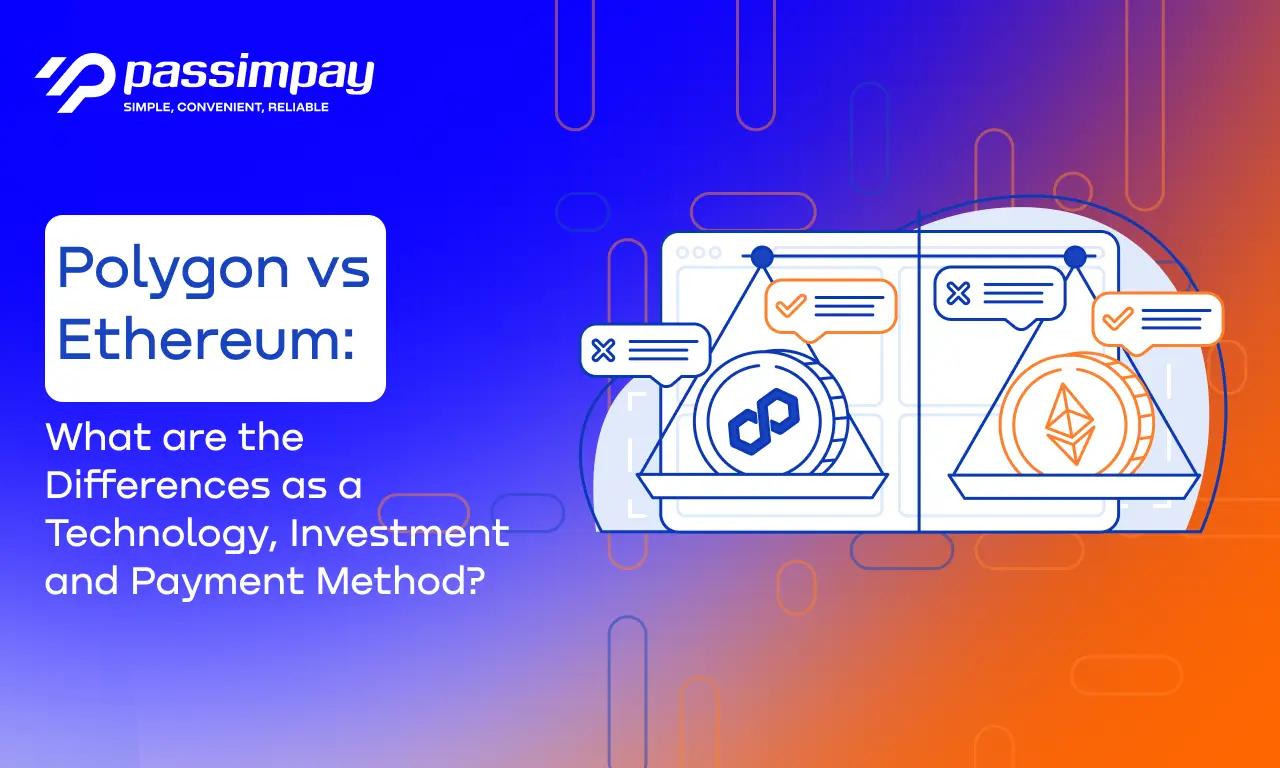
Polygon and Ethereum are two of the most popular proof-of-stake networks where users can engage in DeFi trading or interact with the metaverse through GameFi and NFTs. However, some investors get confused about the difference between these two networks.
This guide is intended to help you decipher the distinctions between Polygon and Ethereum.

Let's understand what Ethereum is
To better understand Ethereum and Polygon, let's start by exploring how the modern internet works and the concept of centralization.
Today, when we transmit our data over the internet, it's typically stored on servers owned by large transnational corporations or governments. This means that our personal information, such as name, phone number, email address, credit card data, medical records, and more, is accessible to these entities. Most of these servers belong to the world's largest technology companies collectively known as GAMAM (Google, Amazon, Meta, Apple, Microsoft).
However, Ethereum represents a true revolution in this realm by allowing online systems to operate without intermediaries. Instead of relying on servers controlled by major corporations like Google, Ethereum enables applications to function within a decentralized network consisting of numerous personal computers.
Thus, Ethereum is a platform that empowers anyone to develop and offer applications on the global network. These applications, known as decentralized applications (or DApps), don't require a central server for operation, eliminating the need for central authorities to manage them.
One could liken Ethereum to a free Apple Store. Today, to offer an application to users, developers must first gain authorization from Apple, adhere to their rules, and pay for hosting.
The core idea of Ethereum is to create a kind of "world computer" — a vast decentralized network that provides the infrastructure for DApps to operate. This removes the need for intermediaries and authorization, as there are no longer third parties controlling the processes.
Overall, Ethereum's concept makes it more accessible and democratic for anyone looking to develop and use decentralized applications, reducing dependence on major corporations.
What is Ethereum 2.0?
Ethereum 2.0 represents an upgrade designed to tackle the primary issues plaguing the platform. In essence, Ethereum grapples with two major concerns: transaction confirmation speeds that are relatively sluggish and the imposition of high fees within the network.

What Polygon is?
Polygon, formerly known as the Matic Network before its official rebranding on February 9, 2021, continues to operate seamlessly despite the change in its name. While the cryptocurrency Polygon was officially introduced in February 2017, it has unofficially existed for several years prior.
The primary goal of Polygon is to expand the capabilities of the Ethereum blockchain. It serves as a foundation for compatibility and scalability, enabling the creation of blockchains that are fully interoperable with Ethereum.
Polygon has captured the interest of developers for good reason. It stands out as a remarkably successful project and is considered one of the most effective endeavors in achieving blockchain compatibility. Its core mission is to address specific limitations within the Ethereum network and ultimately enhance transaction speeds.
Notably, Polygon has achieved more than similar projects like Cosmos or Polkadot, largely due to its compatibility with Ethereum's virtual machine. This compatibility means that anyone developing applications on the Ethereum blockchain can readily leverage Polygon's capabilities. Already, several projects have embraced Polygon's Plasma scaling technology, and the platform's potential is far from being fully realized.

Ethereum vs Polygon detailed comparison
Polygon and Ethereum are distinct yet complementary blockchain projects, each catering to specific needs within the decentralized ecosystem. While Ethereum concentrates on providing a platform for dApps, smart contracts, and digital assets, Polygon addresses Ethereum's scalability issues by offering faster and more cost-effective transactions.
Market capitalization
According to the latest market data analysis, as of January 2023, the market capitalization of the Ethereum network is estimated at $474.6 billion, while Polygon reaches $220.9 billion. Market capitalization is calculated by multiplying the total supply of an asset by its current market price. The higher the market capitalization, the more prominent the network is in the market.
Consensus mechanism
Both networks employ the Proof of Stake (PoS) consensus mechanism. Ethereum transitioned to the Proof of Stake mechanism during the Merge. It is well-known that Proof of Work runs in parallel with excessive energy consumption. Polygon relies on the PoS mechanism and other solutions like ZK rollups and Plasma chains to achieve improved scalability.
TVL
The total value locked (TVL) in the Ethereum blockchain network is estimated at $27.25 billion, which is significantly higher than Polygon's network with a TVL of $1.15 billion. TVL serves as an important metric that provides insights into the network's significance. It represents the estimated total value of all smart contracts deployed on a specific blockchain. Overall, it reflects the scalability, liquidity, and popularity of the blockchain within the DeFi ecosystem.
Paying for gas on Polygon and Ethereum
Polygon developers set out to tackle the problem of costly "gas" fees on the Ethereum network during peak usage periods. Despite Ethereum's price dropping from its high of $196.69, gas costs on Polygon remain lower. To maintain these affordable fees, Polygon underwent a hard fork on January 17, 2023, with the aim of reducing "gas spikes" that could occur due to the quicker block confirmation times in the Polygon Proof-of-Stake chain.
|
Factor |
Ethereum |
Polygon |
|
Transaction Speed |
Low |
High |
|
Transaction Fees |
High |
Low |
|
Scalability |
Low |
High |
|
Decentralized Finance (DeFi) Ecosystem |
Developed |
Developing |
|
Non-Fungible Tokens (NFTs) |
Developed |
Developing |
|
GameFi |
Present |
Present |
|
Compatibility |
Ethereum Virtual Machine (EVM) compatible |
EVM compatible |
|
Testnet for Development and Testing |
Available |
Available |
|
Lower Transaction Costs |
No |
Yes |

The difference between Polygon and Ethereum in the areas of GameFi, Defi and NFTs
Due to the high transaction costs, most GameFi projects are transitioning to the Polygon network. If you're interested in blockchain games, choosing Polygon makes the most sense.
As for DeFi, Ethereum becomes inefficient for smaller capital due to high entry and exit costs. Additionally, the high gas fees on Ethereum can reduce your yield and make asset mining less profitable. In this case, you can use the AAVE platform on the Polygon network and pay lower transaction fees. For small accounts, Polygon is the preferable option.
Both blockchains also support mining and NFT trading. Recently, the largest NFT trading platform, OpenSea, started supporting NFTs created on the Polygon network. Thanks to lower transaction fees on Polygon, OpenSea covers all gas expenses, providing users with free transactions. However, if you transfer ETH to the Polygon network, you will still have to pay a gas fee.
Polygon becomes the best choice when trading on a growing market with low gas fees as a priority. If you're looking for greater liquidity and want to place your collection alongside "blue-chip" NFTs, Ethereum may be the preferred option. The average cost of NFTs on the Polygon network is lower, around $10, whereas on Ethereum, it's about $345. Most "blue-chip" NFTs operate on the Ethereum network, such as CryptoPunks, Azuki, Bores Apes.

Let's summarize
Both networks support decentralized finance (DeFi), non-fungible tokens (NFTs), and GameFi. However, Polygon stands out for its appeal to users with limited budgets and those seeking more cost-effective transaction fees. The combination of Ethereum and Polygon creates a powerful alliance that contributes to the further development of the decentralized ecosystem.
Polygon's main goal is to enhance the accessibility of Ethereum by providing an improved version of the blockchain with lower costs and faster transactions. While there are some uncertainties about Polygon's role after Ethereum completes its upgrades, it currently brings tangible benefits to the cryptocurrency world by attracting more users and offering them scalable opportunities within web3.
 Contáctanos →
D¿Te ha gustado este artículo? Compártelo con tus amigos.


Más