Why Your Business Needs a Backup Crypto Payment Gateway
20/11/2026
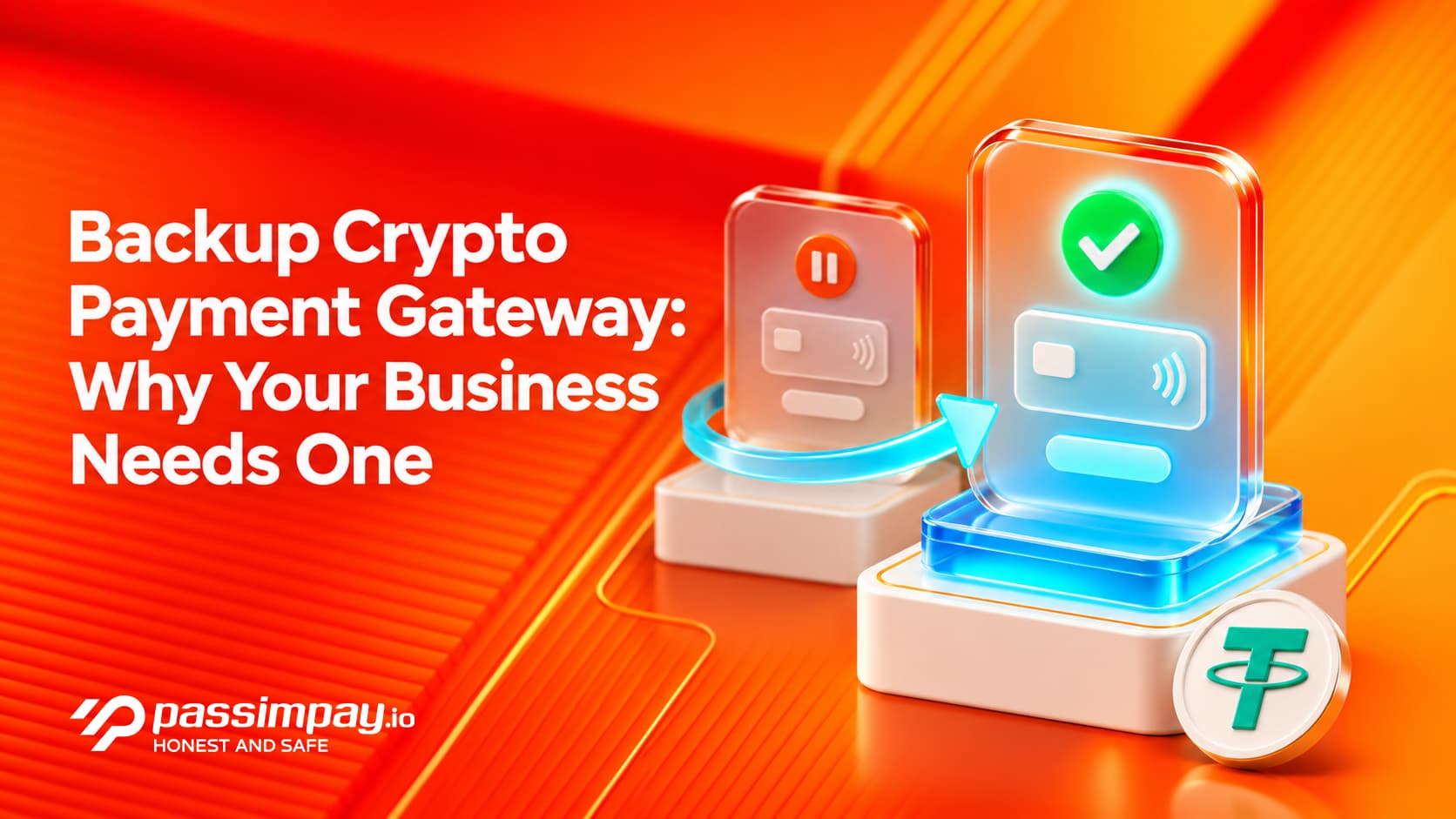
If your checkout depends on one crypto payment provider, any downtime on their side stops your revenue. November 2026 has shown how often that happens. In under three weeks, several well-known providers have had outages, paused withdrawals, network suspensions or domain changes. A backup gateway is no longer something only large merchants need.
What happened in November
These are publicly reported incidents. We list them only to show the pattern, not to judge any provider. Every one of them can happen to any payment service.
Plisio, 8 November. Plisio's website was replaced by a "Service Temporarily Unavailable" notice that mentioned a security incident, and payments were suspended. The notice was later removed, and as of 20 November 2026 the domain plisio.net does not resolve at all. No official incident report has been published. We covered this in Plisio Suspends Payments After a Security Incident.
Heleket, early November. In its Telegram channel, Heleket reported a technical issue that "temporarily affected some functions" and said that "withdrawals will resume on November 10 at 12:00 (UTC+00:00)". It later announced that withdrawals had been fully restored. After that, its main domain became unavailable and merchants were told to repoint their integration to a different domain. Heleket is also on the UK sanctions list, which is a separate and more serious problem for any merchant still working with it. See Heleket Domain and Withdrawal Issues.
CoinGate, since 16 November. CoinGate's status page recorded its Verify component as down for close to four hours on 14 November, and has shown Verify down again since 16 November, 10:50 UTC. As of 20 November that incident is still open. The API, Invoice and Dashboard components are reported as operational.
BVNK, 17 November. BVNK's status page reported that TRON transactions (TRX and USDT-TRC20) were not settling. The issue was identified at 18:22 UTC and resolved at 19:09 UTC.
OxaPay. OxaPay temporarily disabled deposits and withdrawals on the Base network because of network upgrades, and later restored them.
Some of these lasted under an hour. Others lasted days. For a merchant, both mean the same thing: customers who cannot pay, or funds that cannot be moved.
What a single point of failure costs you
Lost sales. A customer who sees a failed or missing crypto checkout rarely comes back later. They buy somewhere else.
Stuck funds. When withdrawals pause, you can't pay suppliers, staff or partners on time, even if your sales are fine.
Emergency engineering. A forced domain or API change means your team has to update the integration under pressure, often outside working hours.
Support load. Customers asking "where is my payment?" flood your support queue while you wait for updates from the provider.
Failover checklist for merchants
Integrate a second gateway before you need it. Setting it up during an outage is too late. Go through onboarding, test payments and webhooks in advance.
Keep the backup "warm". Route a small share of traffic, for example 5–10%, through the second provider. That way you know it works with your live setup.
Decide who switches and how. Write down who can turn the backup on, where the switch is (CMS plugin, config flag or feature toggle), and how long it takes.
Watch your providers. Subscribe to their status pages and official Telegram or X channels. Set alerts for failed invoices and webhook errors on your side.
Don't keep all balances in one place. Withdraw settled funds regularly, so a withdrawal pause doesn't freeze your working capital.
Cover the main coins and networks on both gateways. At a minimum, USDT and USDC on the networks your customers use most, so switching doesn't remove options from checkout.
Prepare customer messaging. Have a short banner or email ready that explains the temporary payment change.
Don't wait for the next outage to find a second provider. Talk to our team and we will help you plan a backup checkout and test the switch before you need it.
How PassimPay helps
PassimPay is a crypto payment gateway for business that can run alongside your current provider as a primary or backup option. We publish 99.99% uptime and we still think every merchant should have a second gateway ready:
Fast integration. Use the API or the ready-made plugins for popular CMS platforms to add a second checkout option without rebuilding your store.
Stablecoin payments. Accept USDT and USDC with the USDT payment gateway, so customers can pay in the coins they already use.
EUR on-ramp and off-ramp. Exchange USDT and USDC to and from EUR via SEPA through our on-ramp, a separate B2B service arranged individually for each transaction with a dedicated manager, so your liquidity does not depend on a single exchange.
Coverage. Check where we work on the supported countries page.
Free AML screening. Incoming payments are checked before they are credited, at no extra charge on any plan.
FAQ
What is a backup payment gateway?
A second payment provider that is already integrated and tested, so you can route payments to it if your main provider goes down.
Do I need two crypto payment gateways if my provider is reliable?
Even reliable providers have planned maintenance, network suspensions and occasional incidents. A second gateway protects your revenue during those hours.
How do I switch payments to a second processor during an outage?
Use a config flag or plugin setting that changes which gateway checkout uses. Test the switch in advance and write down who is allowed to make it.
My provider had an outage. What should I do right now?
Check its official status page and channels, pause new invoices if payments are failing, and move checkout to your backup. If you used Plisio, see our Plisio alternatives guide.
Sources
Plisio: holding page observed on plisio.net on 8 November, removed later; domain does not resolve (ERR_NAME_NOT_RESOLVED) as of 20 November; no incident report published
Heleket: t.me/s/heleket, posts 182-184
CoinGate: status.coingate.com, Verify incidents of 14 November and of 16 November, 10:50 UTC
BVNK: bvnk.status.io, "TRON transactions not settling", 17 November
OxaPay: t.me/s/oxapay, posts 301-302
Context: OxaPay, Payment Reliability in Ecommerce, Crypto Payment Failures and Retention
 Contact us →
Do you like this article? Share it with your friends.


More